Tropicana: A Research Case Study
BACKGROUND
Tropicana is an iconic, all-American brand. To most people, it's the carton with the orange and the straw; it’s reliable and familiar. It's the kind of brand that has earned it’s place on shelves across the nation.
But, new drinks are crowding shelves and capturing the attention of younger consumers who are reading every label before they buy anything. We wanted to know: was Tropicana keeping up? Or was it coasting?
THE ASK: Answer one research question: what consumer behaviors and perceptions should Tropicana pay attention to?
THE CHALLENGE: It's tempting to assume that a brand like Tropicana is safe and that older consumers' loyalty creates a stable floor, and that younger consumers will eventually come around because their parents bought the drink.
My approach: I knew we had to talk to older and younger generations to better understand not just Tropicana’s perception, but overall juice drinking habits. Were younger consumers actually interacting with juice the way their parents did?
METHODOLOGY
We ran a four-part research design to get enough signal across generations and contexts.
We chose to structure our findings by beliefs vs. behaviors… what is the gap between what we believe vs. how consumers are actually behaving.
-
Approximately 20 conversations, ranging from structured IDIs to intercept-style street interviews. We asked people who worked at brunch restaurants, to people shopping in the juice aisle at grocery stores.
We learned how they actually use juice, what they think about when they're standing in the beverage aisle, and when (if ever) they'd reach for Tropicana versus something else.
-
We set-up a table at 2 different locations: a church (to capture an older segment) and a college campus (to capture a younger segment).
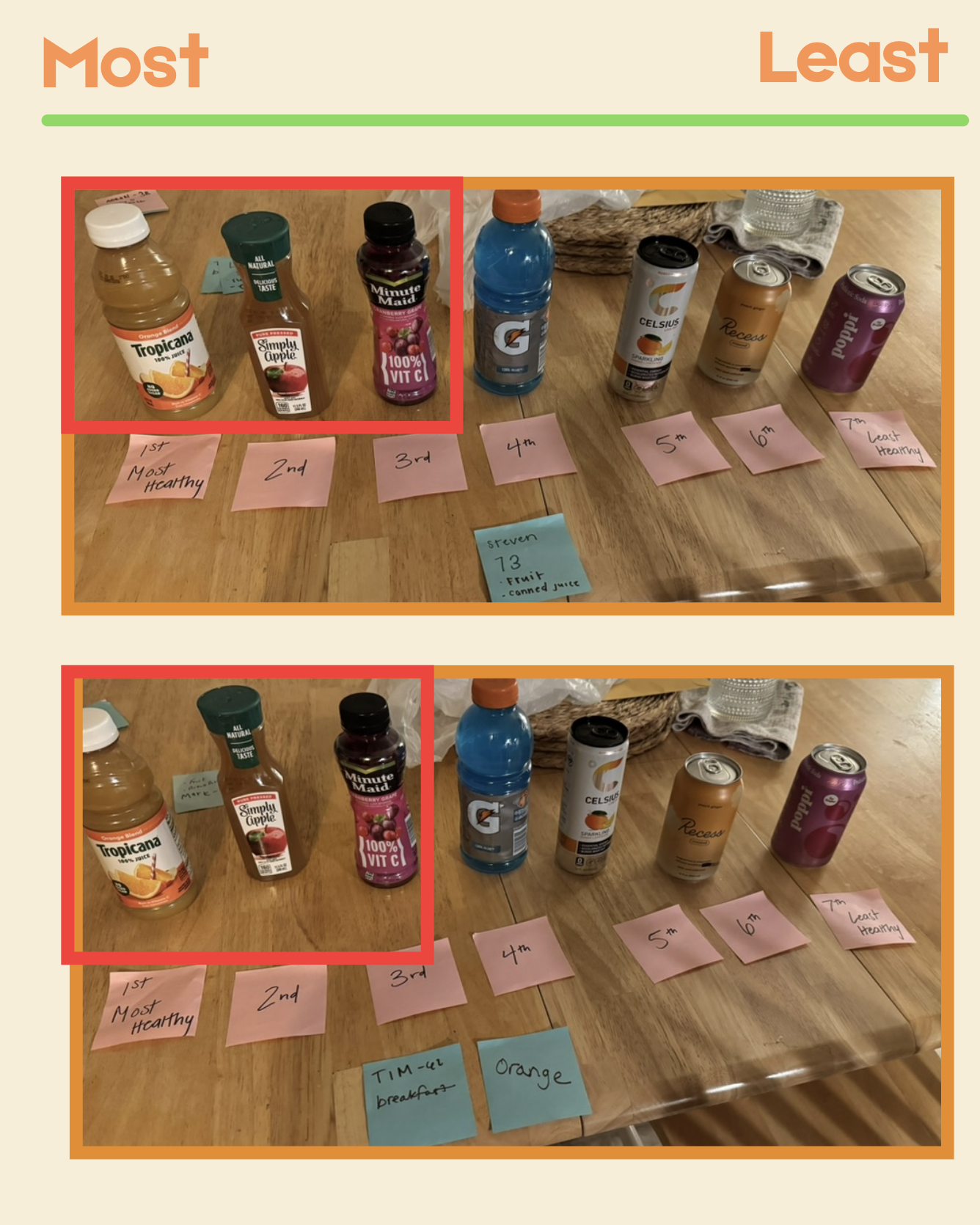
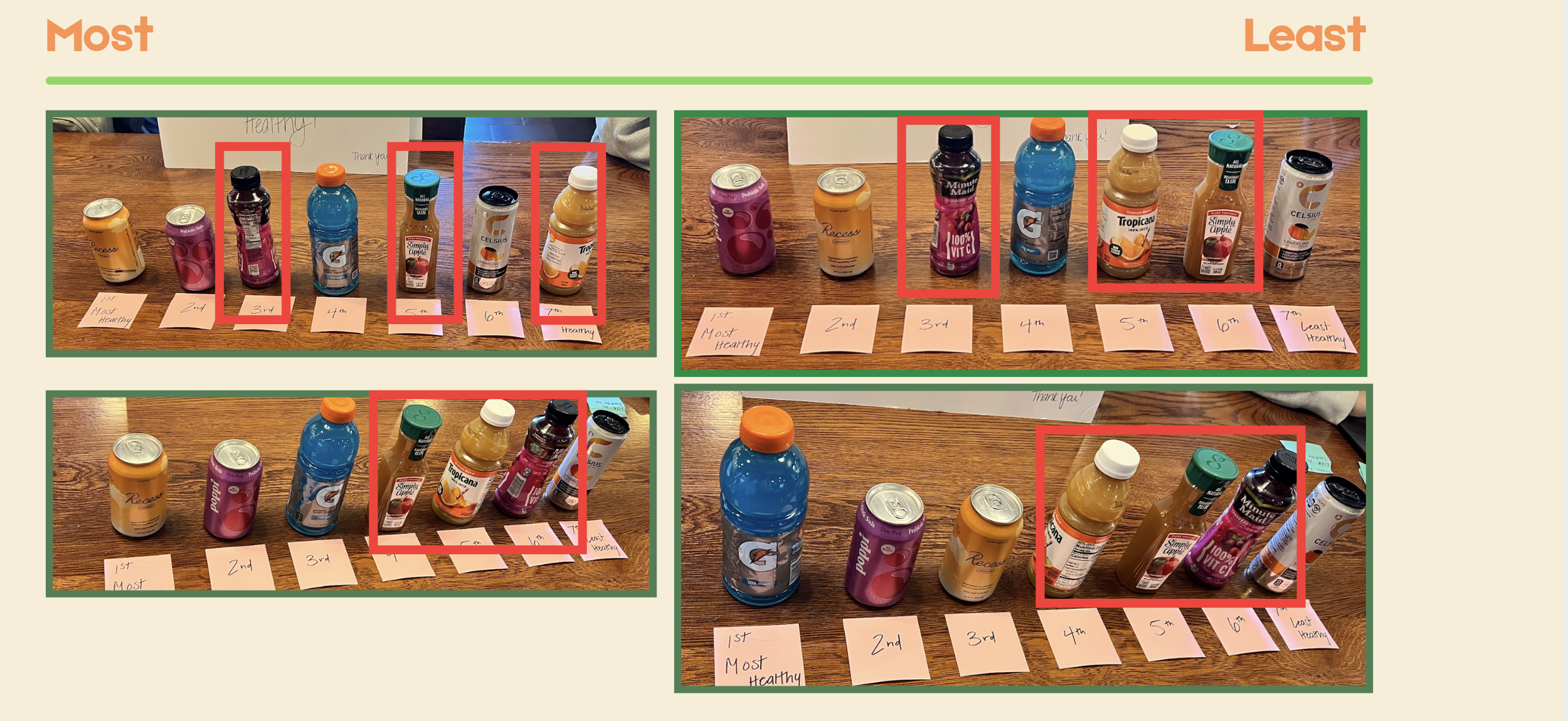
35 participants physically ranked a lineup of beverages from most to least healthy based on perception alone, before reading any labels. We wanted to see where Tropicana landed in the line up and why.
-
518 responses gathered across Reddit, Instagram, Facebook, and survey platforms. We cast wide deliberately. The goal was to find patterns across age groups.
-
A competitive review of the juice category and a Four C's analysis to map where Tropicana sits relative to the market
Research Findings
Belief: Consumers are pouring Tropicana the same way their parents did.
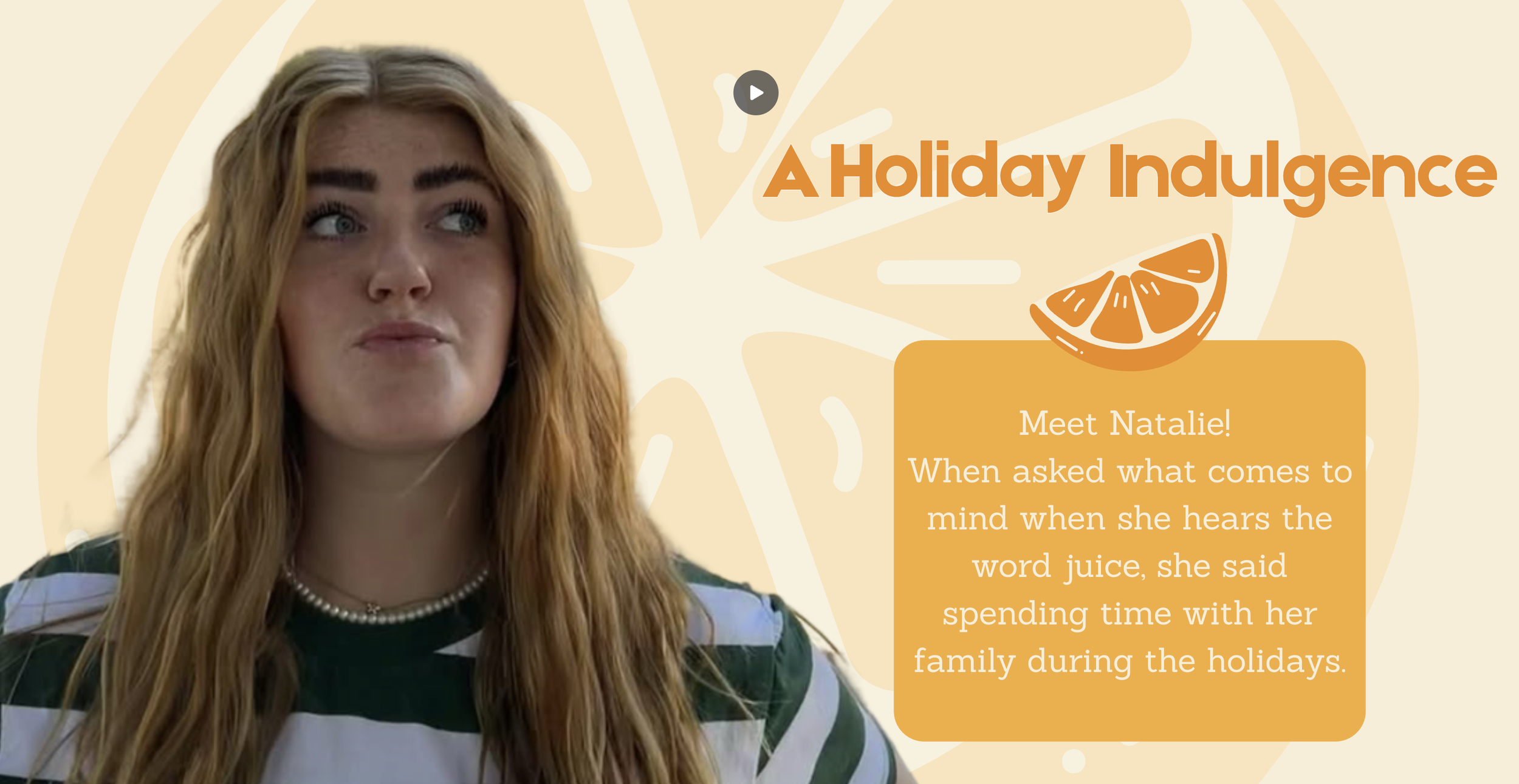
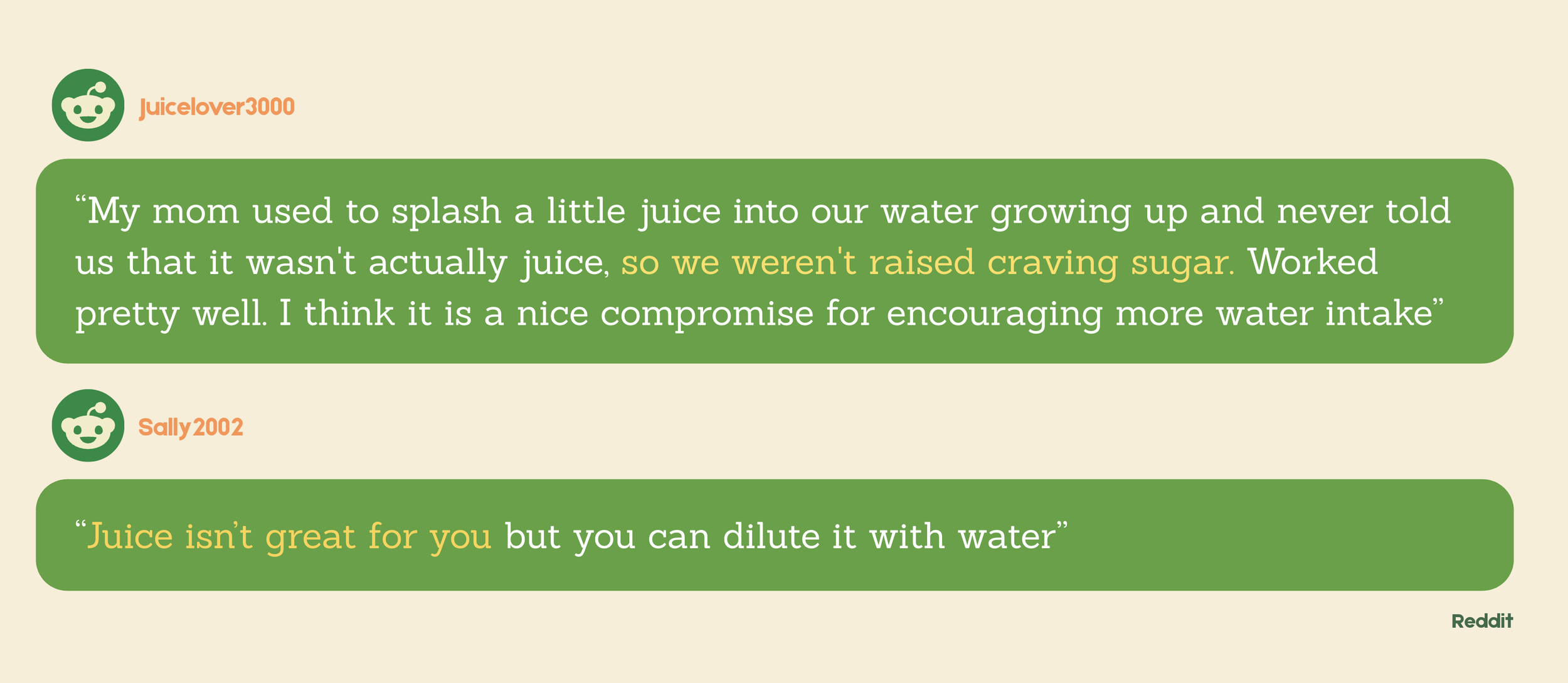
Behavior: Sugar anxiety has quietly restructured how people consume juice, especially younger ones. 60% of younger generation respondents ranked 100% juice with no added sugar as their number one nutritional priority when choosing a juice, above taste, price, or brand. The behavioral result is what we coined Splash Culture: people are no longer drinking juice straight in full pours. They're asking for a splash in a screwdriver. They're diluting children's juice with water to cut the sugar. The daily occasion that built Tropicana's market position has completely shifted.
Belief: Tropicana's decades of brand equity translate to automatic trust and purchase.
Behavior: Younger consumers don't just trust brand names, they trust labels. The primary purchase behavior we observed was intensive label-checking: scanning for sugar content, ingredient lists, vitamin density, and whether the product is 100% juice or a blend. Tropicana's current packaging is not built for this moment. In our immersion exercise, products with cleaner, more transparent labeling consistently outranked Tropicana in perceived healthiness among younger participants.
Belief: Orange juice is a morning product.
Behavior: Traditional meal structures have changed. People eat, snack, and drink across the whole day in patterns that don't resemble three meals. Juice has followed. The same consumers who won't drink a full glass in the morning might add juice to an afternoon smoothie, or sip a small pour as an afternoon treat. Juice has ultimately become a special indulgence. Tropicana's creative has stayed at the breakfast table while its consumers left.
OLDER GENERATION
YOUNGER GENERATION
The Insight:
Tropicana is in a nostalgia trap.
One word that kept coming up in our qualitative research was “nostalgic”.
When asked to dig a little deeper to describe what consumers meant by nostalgic, we found out that doesn't necessarily have positive associations. Nostalgia brands can be seen as boring, single use, or traditional use.
In this case orange juice was viewed for breakfast and as “your grandparent's drink”.
Recommendations
Meet Splash Culture where it lives:
Stop building campaigns around a consumption occasion that has largely moved on. Younger consumers are using juice as an ingredient, a mixer, a splash. Lean into it explicitly. Push smaller formats. Market Tropicana's low-sugar and zero-sugar lines as the smart splash. Tropicana can become the juice you add to a drink when you want the flavor without the guilt. Acknowledge how people are actually consuming the product and meet them there.
Break out of breakfast:
The morning, breakfast table imagery has imprinted the brand's occasion in consumers' minds for decades. Showing Tropicana in the afternoon, in a cocktail, in a smoothie, as an after-school pour can expand the brand’s identity and more accurately reflect how consumers already interact with the product when they do choose it.
Win the label-checking moment:
Tropicana has some nutritional story to win with skeptical younger consumers. Vitamin C, no artificial ingredients, 100% juice and fiber for their pulp juices. A package redesign that highlights this content and it’s benefit, makes the "nothing to hide" message immediately scannable and would directly address the label checking behavior identified by our research.
REFLECTION
This was a (very fun) project for our research class. I think that what stayed with me from this project was the immersion exercise. Watching younger participants physically place Tropicana in the middle or bottom of a healthiness ranking was our way in to validate the nostalgia trap thread we kept pulling on.